Need flooded basement cleanup in Philadelphia?
Have a question about water damage? Send a request or write to contact@totallyanswered.living, and we will point you toward a local provider in our network.
No obligation
Request your basement estimate
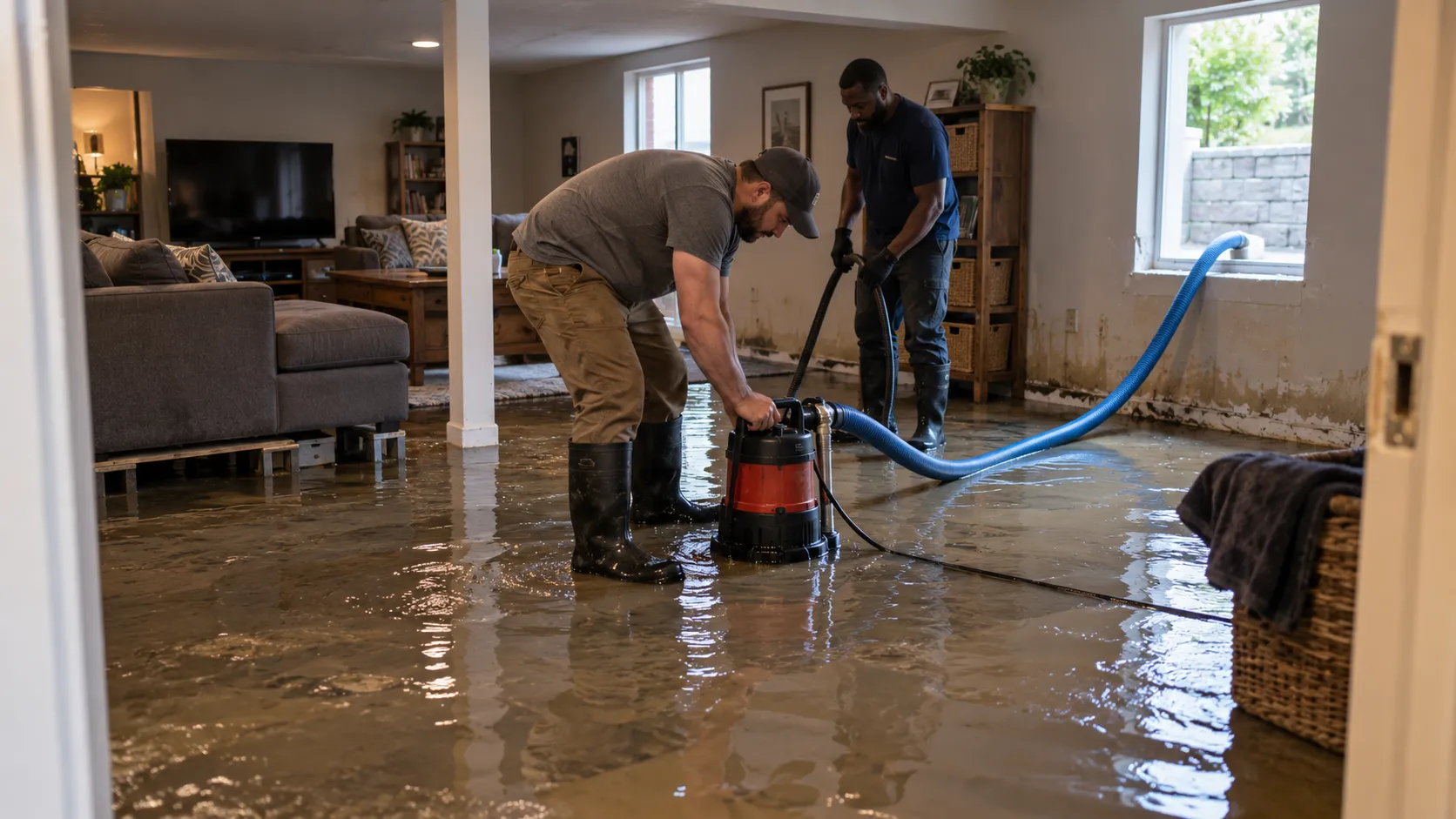
Is your basement full of water, and are you not sure where to begin? You are not alone. Flooded basements are common in older homes with full basements and stone or block foundations, especially after snowmelt or a coastal storm.
Totallyanswered Restoration is a referral service. We connect homeowners in Philadelphia and the Greater Philadelphia area with independent local providers who do the pumping, drying, cleaning and sanitizing. The providers do the work, not Totallyanswered Restoration. Request an estimate, compare what you hear, and get your quote in writing. Protect what you own by acting early, and ask questions before you agree to anything.
Not yet, maybe. Water and electricity are a risky mix, so safety comes first.
Here is a simple checklist:
If you cannot reach the panel without stepping in water, do not try. A licensed electrician or your utility can help. Many providers will also ask about power before they arrive.
This is the question that shapes everything else. The source decides how dirty the water is and what has to be done.
A burst pipe or a failed water heater usually starts as clean water. It is still a problem, but it is the easier case.
A washing machine or sump pump overflow can carry soap and dirt. Handle it with more care.
Sewer backup and outside floodwater can hold bacteria. In cold climates, snowmelt and storm surge often push this kind of water in through walls and floors. Keep kids and pets away.
Wet materials start to change fast. Mold can begin to grow within a couple of days in damp, closed spaces. Drywall soaks up water like a sponge. Wood can swell and warp.
Quick action also protects your home's value. A dry, clean, well-documented basement is easier to sell later. A basement with hidden mold or a musty smell can scare off buyers.
Many providers can respond quickly. Request a callback to check provider availability in your area.
Providers vary, but a typical job follows a clear path.
A floor that looks dry can still hold moisture. Skipping the drying step is how mold returns. Ask the provider how they will confirm dryness.
Yes. A finished space has more to protect and more to remove.
Carpet, padding, baseboards, wall insulation and drywall can trap water. Some can be dried in place. Some must come out. The provider will test and explain which is which.
Bare concrete, stone and block dry more easily. Cleanup often focuses on pumping, sanitizing, and drying the air and the framing.
Start with a quick sort. Move dry items to a safe spot first.
Some providers offer contents cleaning. Ask if it is part of the quote.
The price depends on the depth of water, the square footage, the type of water and how much material must be removed. Typical U.S. ranges are shown in the cost table on this page. Your job may fall outside them.
Ask, then act. A written quote lets you compare providers fairly.
The job is not done when the water is gone. Rebuilding comes next.
Some policies may cover sudden damage, but flood and sewer backup often need separate coverage. Check your policy. Providers can often help document damage for a claim.
A good provider welcomes questions. Try these:
Quote in writing. It is the simplest way to avoid surprises.
You have a plan now. Request an estimate and an independent provider in our network can walk you through the details.
Providers pump out standing water so crews can see the floor and start work.
Wet carpet, padding and damaged drywall come out before hidden moisture turns into mold.
Air movers and dehumidifiers draw moisture from slabs, framing and the air itself.
Hard surfaces get washed and sanitized, with extra care after sewage or storm water.
Prices vary a lot by job. These are typical U.S. ranges, not quotes. Depth, size and water type matter most, so always get a written quote.
| Item | Typical range | Notes |
|---|---|---|
| Water pumping | $300 – $1,000 | Depends on depth and volume |
| Structural drying | $1,000 – $4,000 | Equipment days and basement size |
| Wet carpet and pad removal | $500 – $2,500 | Based on square footage |
| Drywall removal and disposal | $1,000 – $3,500 | Higher if insulation is wet |
| Cleaning and sanitizing | $500 – $3,000 | Sewage water costs more |
| Mold testing or treatment | $500 – $6,000 | Only if growth is found |
Stay clear of water near electricity, then take photos of the damage and standing water.
Tell us about your basement and we will connect you with a local provider.
Check scope, drying plan and price before you agree to start.
The independent provider pumps, dries and cleans, then explains the next steps.
Careful cleanup helps save your floors, framing and belongings and protects your home's value.
We explain what drives costs so you can compare written quotes with confidence and calm.
You are matched with independent providers who know older homes, stone foundations and cold weather.
Requesting an estimate does not commit you, so you can ask questions and decide at your pace.
Have a question about water damage? Send a request or write to contact@totallyanswered.living, and we will point you toward a local provider in our network.
Drying often takes several days, though it depends on how much water got in, what materials are wet and the humidity. A provider should check moisture readings and tell you when the basement is truly dry, not just guess by touch.
Small, clean-water leaks may be manageable if the power is off. Deep water, sewage or soaked drywall is different. Hidden moisture and contaminated water are risky, so many homeowners ask a provider to help.
It depends on your policy and the cause. Some policies may cover sudden damage, but flood and sewer backup often need extra coverage. Check your policy, and ask the provider about help documenting damage.
Have a question about water damage? Send a request or write to contact@totallyanswered.living, and we will point you toward a local provider in our network.
No obligation