Need water damage restoration in Philadelphia?
Have a question about water damage? Send a request or write to contact@totallyanswered.living, and we will point you toward a local provider in our network.
No obligation
Request an estimate to get started
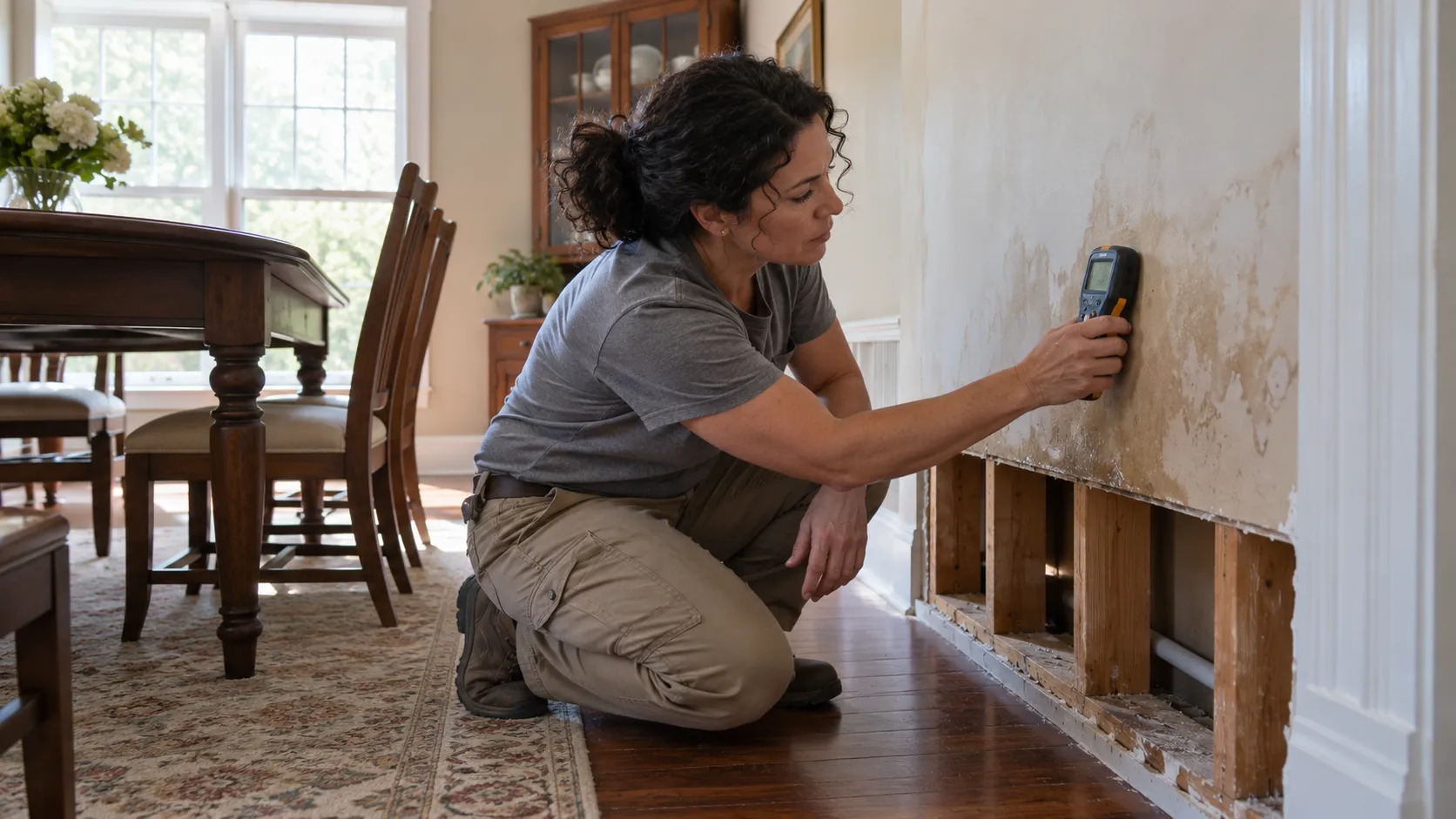
Is that stain, soggy floor or musty smell really water damage? If water got where it should not be, the answer is probably yes. Water damage restoration is the job of removing the water, drying the structure, cleaning affected areas and repairing what was harmed.
Totallyanswered Restoration is a referral service. We connect homeowners in Philadelphia and the Greater Philadelphia area with independent local providers who do the work. You can request an estimate, compare what providers offer, and ask questions before anything starts. Doing the job right protects your home, its value and its future resale. This page walks you through the first steps, what restoration covers, what drives the price and how to choose a provider you feel good about.
You found a wet carpet, a bubbling ceiling or a damp wall. Now you wonder how bad it is. Here is the short answer: if building materials stayed wet, treat it as water damage. Surface water you wipe up in minutes is one thing. Water that soaked into drywall, wood or insulation is another.
Common sources include burst pipes, failed water heaters, roof leaks, appliance hoses, sewer backups and heavy storms. The source matters, because it shapes the plan.
Stay calm and work through the safe basics:
Then ask for help. A provider can see what you cannot.
Water spreads fast. It wicks up walls, slips under flooring and settles into framing. The longer materials stay wet, the more likely they swell, warp or stain. Mold can begin to grow within a couple of days in damp, warm spaces.
Many providers can respond quickly, but availability varies. Request a callback to check provider availability in your area.
Restoration is more than running a fan. A thorough job usually follows a sequence.
Providers often use moisture meters and thermal cameras to find wet spots behind walls and under floors. That keeps hidden pockets from being missed.
Pumps and extractors pull out standing water. Then air movers and dehumidifiers dry the structure. Wet materials that cannot be saved, like soaked insulation, may be removed.
Surfaces are cleaned and treated. Repairs can follow, from patching drywall to replacing flooring.
Yes, a lot. Providers usually sort water into three groups.
This comes from a supply line or a rain leak. It is the simplest case, though it can get worse as time passes.
This comes from a washing machine or dishwasher. It carries some contaminants and needs more careful cleaning.
This includes sewage and floodwater. It can carry harmful germs. Keep family and pets away, and let a provider handle it with proper protective gear.
If you live where winters are cold, you know the pattern. Frozen pipes split, snowmelt seeps in during spring and coastal storms push water against foundations. Older homes with stone or block foundations, full basements and tight attic spaces can hide moisture for a long time.
Tell your provider about your home's age and layout. It helps them plan where to look.
Maybe. Some policies may cover sudden damage, like a burst pipe. Slow leaks, flooding and sewer backups are often treated differently, so check your policy or ask your agent.
Providers can often help document damage for a claim with photos, moisture readings and written notes. Keep receipts and do not throw away damaged items until you have documented them.
Ask, then act. A few questions go a long way:
A good provider answers plainly. If the answers feel vague, keep looking.
Price depends on how much water, how long it sat, the water type and how many rooms are involved. Larger or contaminated jobs cost more. Quote in writing, so you know what is included before work begins. The cost table on this page shows typical U.S. ranges.
After drying, the provider checks that moisture levels have returned to normal. Then comes cleaning, odor control and rebuilding. Small jobs may wrap up in days. Bigger ones can take weeks, especially if materials need to be ordered.
Keep a simple folder with your photos, estimates and paperwork. It helps if you sell later.
Buyers and inspectors look for signs of past water problems. A job done properly, with the structure fully dried and repairs documented, leaves less to worry about. Protect what you own by fixing the cause, not just the stain.
You do not have to figure this out alone. Request an estimate and Totallyanswered Restoration will connect you with an independent local provider who can look at your situation. There is no obligation to hire anyone.
Pumps and extractors pull standing water out of floors, carpets and low areas so drying can begin.
Air movers and dehumidifiers dry walls, subfloors and framing until moisture readings look normal.
Affected surfaces and belongings are cleaned and treated to reduce odors, bacteria and mold risk.
Drywall, flooring, trim and paint are repaired or replaced so rooms look and function normally again.
Every job is different, so these are typical U.S. ranges only. Size, water type, materials and how long things sat wet all change the price. Always ask for a written quote before work begins.
| Item | Typical range | Notes |
|---|---|---|
| Small clean-water cleanup | $500 – $1,500 | One room, caught early |
| Water extraction | $750 – $2,500 | Depends on depth and area |
| Structural drying equipment | $1,000 – $4,000 | Priced by equipment and days |
| Drywall and insulation removal | $1,000 – $3,500 | Varies by wall and ceiling area |
| Multi-room restoration and repairs | $3,000 – $10,000 | Includes some rebuild work |
| Contaminated or major loss | $10,000 – $25,000+ | Sewage, floodwater or large spread |
Tell us what happened, where, and how much water is involved using the short form.
Totallyanswered Restoration connects you with an independent provider serving Philadelphia and nearby.
Ask about scope, drying plan and price, then compare before choosing.
Your chosen provider does the work and keeps you updated along the way.
Providers in our network can explain the scope and price in writing before you decide anything.
You are matched with independent providers who know area homes and weather.
Ask questions about the work, timing and costs without pressure.
Requesting an estimate does not commit you to hiring any provider.
Have a question about water damage? Send a request or write to contact@totallyanswered.living, and we will point you toward a local provider in our network.
Small clean-water jobs often need a few days of drying. Larger losses or contaminated water can take a couple of weeks, especially when repairs and rebuilding are included. Your provider can give a timeline.
Some policies may cover sudden damage, like a burst pipe, but flooding and slow leaks are often treated differently. Check your policy or ask your agent before filing.
Small spills may be manageable with towels and fans. For wet walls, floors or anything larger, professional equipment is safer because hidden moisture can lead to mold.
Have a question about water damage? Send a request or write to contact@totallyanswered.living, and we will point you toward a local provider in our network.
No obligation